ARTISTS
- Toshimitsu Imai
- 今井俊満
- Toshimitsu Imai
- 今井俊満
Toshimitsu Imai
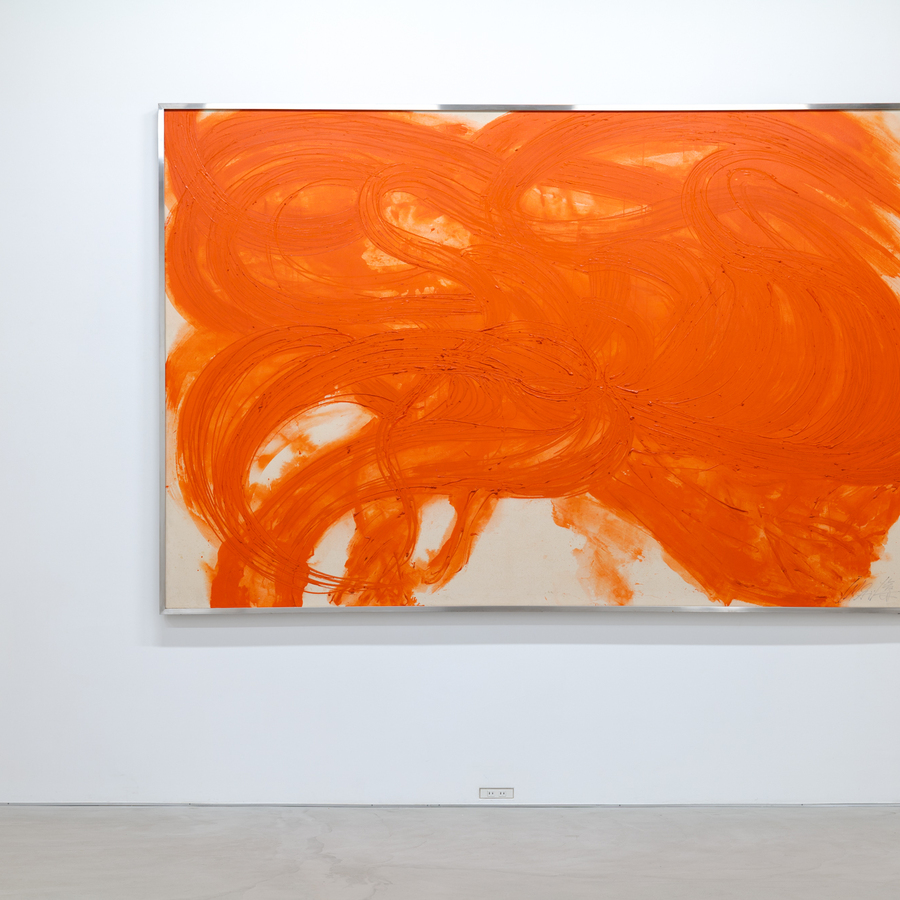
Born in Kyoto in 1928, Toshimitsu Imai studied for one year in the Oil Painting Department at Tokyo University of the Arts before relocating to France in 1952. During his time in Paris, he developed close relationships with artists such as Sam Francis and the influential art critic Michel Tapié. Immersed in the movement of Art Informel, Imai developed a dynamic mode of abstraction characterised by dense materiality and a vibrant, expressive use of colour.
In 1956, at the request of Tarō Okamoto, Imai was involved in coordinating the inclusion of works from Michel Tapié’s collection for The World: Art of Today exhibition, organised by The Asahi Shimbun and held at venues including Nihonbashi Takashimaya. The exhibition marked the first major introduction of Art Informel painting to Japan and generated significant critical attention, becoming a key moment that shaped its subsequent reception.
From the 1960s onwards, Imai continued to work between Japan and France, establishing his international reputation through participation in major exhibitions such as the 30th Venice Biennale (1960) and the 7th Bienal de São Paulo (1963). At Expo ’70 Osaka, he served as art director for a corporate pavilion. In the 1980s, he developed the Ka-Chō-Fū-Getsu series, incorporating gold and silver leaf and engaging with elements of traditional Japanese painting. In later years, he also addressed themes confronting the devastation of war, notably in his Hiroshima series.
Imai’s works are held in numerous public collections, including The National Museum of Modern Art, Tokyo; The National Museum of Modern Art, Kyoto; The National Museum of Art, Osaka; Museum of Contemporary Art Tokyo; Aichi Prefectural Museum of Art; Hyogo Prefectural Museum of Art; and Shiga Museum of Art, among others.
Powered by Froala Editor
- biography
- 略歴
Selected Solo and Group Exhibitions
1952 Solo Exhibition, Shirokiya Gallery, Nihonbashi, Tokyo, Japan
1953 Four-Person Exhibition with Kumi Sugai, Yasukazu TABUCHI (Yasse TABUCHI), and Paolo Vallorz,
Foyer des Artistes, Paris, France
1957 Solo Exhibition, Galerie Stadler, Paris, France
World Contemporary Art Exhibition, Bridgestone Museum of Art, Tokyo, Japan
1959 1st Biennale de Paris, Paris, France
1960 30th Venice Biennale, Venice, Italy
1963 7th São Paulo Biennial, São Paulo, Brazil
Contemporary Trend of Paintings: Occident and Japan,
The National Museum of Modern Art, Kyoto, Japan
1989 IMAÏ A RETROSPECTIVE 1950–1989, The National Museum of Art, Osaka, Suita, Osaka, Japan;
Meguro Museum of Art, Tokyo, Japan; Iwaki City Art Museum, Fukushima, Japan
1991 Toshimitsu Imai Exhibition, The Museum of Modern Art, Toyama, Toyama, Japan
2002 The Unfinished Century: Legacies of 20th Century Art, The National Museum of Modern Art,
Tokyo, Japan
2003 Aventure de la peinture-Toshimitsu Imaï et ses contemporains, ATC Museum, Osaka, Japan
Selected Public Collections
The National Museum of Modern Art, Tokyo
The National Museum of Modern Art, Kyoto
The National Museum of Art, Osaka
Museum of Contemporary Art Tokyo
Aichi Prefectural Museum of Art
Hyogo Prefectural Museum of Art
Shiga Museum of Art
The Museum of Modern Art, Gunma
Powered by Froala Editor
- PAST EXHIBITION
- 過去の展覧会